
KEO News Wire
Joel Stransky’s drop goal was the real thing
Joel Stransky’s World Cup-winning drop goal has lived forever on film and replay. Mark Keohane was there for the real thing – and no recreation will ever compare.
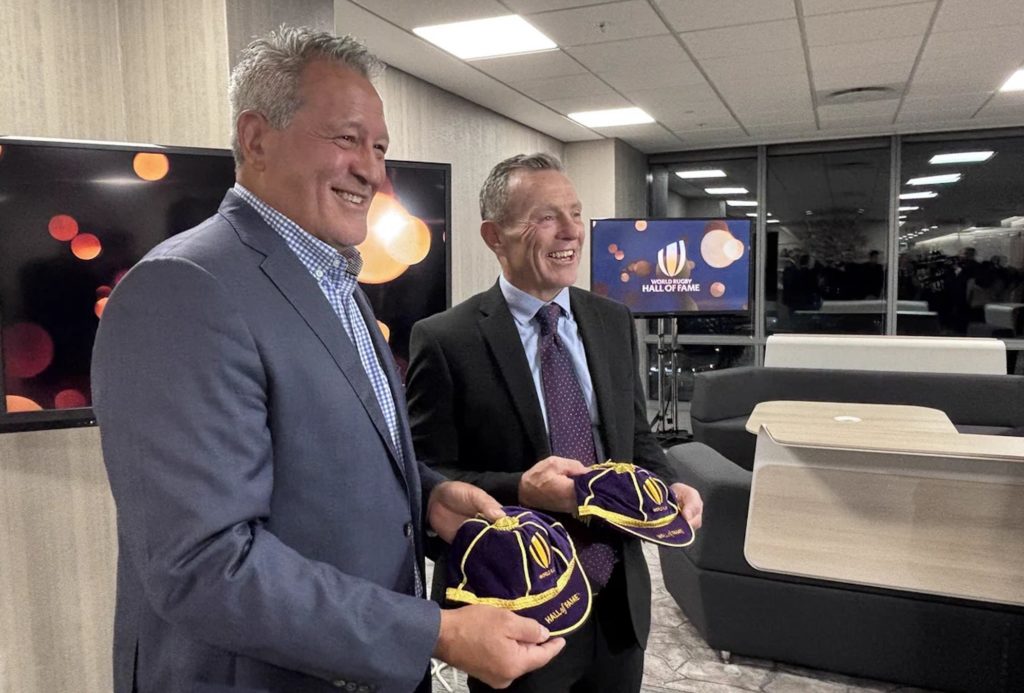
Joel Stransky kicked South Africa into rugby immortality in the 1995 World Cup final. Thirty-one years later, his World Rugby Hall of Fame induction is overdue recognition of a career too often reduced to one moment – even if it remains the greatest moment.
Joel Stransky
Archie Henderson was my first sports editor. He is a mentor, a friend and one heck of a storyteller.
He is also straight to the point. When the movie Invictus was released celebrating the Springboks 1995 World Cup title win, I asked him what he thought of the movie.
He didn’t blink in responding: ‘Nothing, I preferred the real thing.’
The hero of that 15-12 World Cup final win was Joel Stransky, who kicked the defining drop goal in extra time.
I have watched that drop goal on replay so many times, but it never compares to having been in the press box on that day and watching it all unfold live.
I preferred the real thing.
Stransky was inducted into World Rugby’s Hall of Fame in Cape Town earlier this week. So too was All Blacks No 8 Zinzan Brooke.
Both are iconic names in Rugby’s Greatest Rivalry and the only surprise is that it has taken so long for the duo to be formally acknowledged.
Stransky, in particular, engraved his name in rugby folklore with the magical three pointer. South Africans are eternally grateful for that moment. Who knows how rugby’s Rainbow Nation story would have unfolded had Stransky missed with his drop goal and New Zealander Andrew Mehrtens succeeded with his three attempts.
Stransky’s drop goal did go over and this was the week when the YouTube views of that moment multiplied. It never gets old watching that ball sail over.
Stransky’s contribution to the Springboks and South African rugby extends beyond his podium moment. He started the 1995 World Cup with a complete performance against the defending champions Australia at Newlands.
The Boks won 27-18 and Stransky kicked a conversion, four penalties, a drop goal and scored a try for 22 points.
Australia would again be dismantled by Stransky a year later in Bloemfontein when he scored all 25 points in the Boks’ win.
Australia was integral to Stransky’s Test career; he made his Springboks debut in Australia and scored his first international points against the Wallabies.
Stransky’s Test career would be limited to 22 matches, in which he scored 240 points. Those points came from six tries, 30 conversions, three drop goals and 47 penalty goals.
Stransky left South Africa in 1997 for England’s Leicester Tigers and scored a club record 459 points in his second season in 1998. He would play 73 matches for the Tigers and score 896 points.
It was fitting that Morne du Plessis, the 1995 World Cup final manager, was present for Stransky’s induction. Du Plessis is the most respected and popular global ambassador for South African rugby.
Du Plessis is mostly introduced as the 1995 World Cup-winning Springboks manager, but this limited description does a disservice to one of the Springboks greatest players and captains.
Du Plessis won 13 of 15 Tests as the Boks captain and like Stransky, he would play 22 Tests.
Like Stransky, he played his first Test against Australia (in 1971).
To keep with the Australian theme in both the careers of Du Plessis and Stransky, World Rugby chairman Brett Robinson is a former Wallabies. He did the presentation.
Another Springboks great, Rob Louw was in the room as was the Prince of Wings Carel du Plessis. All Blacks 1987 World Cup-winning wing, Sir John Kirwan was seated at the same table as Du Plessis.
The duo, in their era, were the standout wingers in world rugby alongside Australia’s David Campese.
Du Plessis, on the left wing, scored a remarkable try at Twickenham while playing for the Overseas XV against a Five Nations XV. Kirwan, on the right wing, started the movement that led to the try.
If you are too young to remember, look up that try at Twickenham on the 19th April, 1986. Equally, if you only know Morne du Plessis as a Springboks team manager, look up videos of him playing for Western Province and South Africa.
Louw’s playing days are also documented on YouTube and there are plenty of mesmerizing moments from All Blacks No 8 Brooke, playing for Auckland, the Blues and the All Blacks.
Salute!
Mark Keohane’s Sunday Times and Times Live Keo Uncut columns
-
 KEO News Wire2 weeks ago
Eben Etzebeth ignites spirited & stunning Sharks in URC
-

 KEO News Wire1 week ago
Stormers rave about the return of King Kolisi
-
 KEO News Wire5 days ago
Stormers and Sharks set for Bok-loaded Cape Town blockbuster
-
 KEO News Wire5 days ago
All Blacks under pressure as Wallabies eye Eden Park shock
-
 Rugby5 days ago
Bulls and Lions ready for fierce Jukskei derby
-
 KEO News Wire3 days ago
All Blacks hammering of Wallabies give Springboks series win perspective
-
 KEO News Wire6 hours ago
Investec Champions Cup is SA rugby’s next frontier
-
 KEO News Wire7 hours ago
Stormers and Bulls hit Europe with derby momentum