
KEO News Wire
Why Siya Kolisi will lead the Springboks in Rugby’s Greatest Rivalry Series
Inspiring and influential, the 103-Test Springboks leader is not done yet.
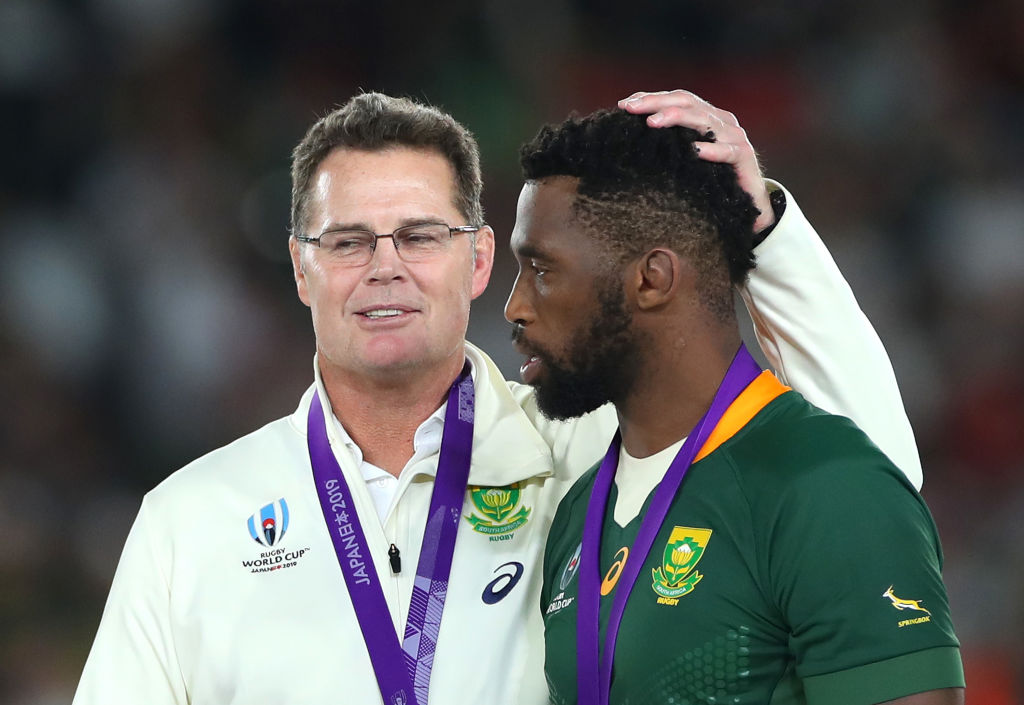
Siya Kolisi will captain the Springboks in Rugby’s Greatest Rivalry series against the All Blacks. He will wear the No 6 jersey. And he will remain integral to the Springboks 2027 World Cup campaign.
This is not a statement declared because of sentiment or influenced by the romance of what Kolisi has done for the Springboks.
It is based on what he will still do for the World Champions.
Kolisi’s story, inspiring and influential, is not done yet.
Don’t confuse the symbolism of a player whose story connects a nation with his on-field contribution.
Kolisi makes it as a player, as he has done for 103 Test matches.
Kolisi’s wisdom, understanding of the Test environment, physicality and rugby intelligence command the famed Springboks No 6 jersey.
Paul de Villiers, in the three Test matches against England, Scotland and Wales, improved with every outing. He would have given Springboks coach Rassie Erasmus comfort that on-field life after Kolisi exists.
But Erasmus certainly won’t be interpretating a rookie’s standout start as a representation of his 103-Test captain’s end.
Never.
Kolisi and Erasmus are a combination that will continue until the end of the 2027 World Cup.
Erasmus will never select Kolisi because he is the captain, which is why the player’s motivation has never waned. Neither has Kolisi’s desire to play the next Test as if it was his first one.
The All Blacks four-Test series will be the most demanding examination of the Springboks outside a World Cup. The Boks will be challenged technically, physically and emotionally.
Player depth will be paramount to South Africa’s success, which is why Erasmus used 43 players in the three Nations Championship Test matches.
Significantly, only 16 of the 43 played 80-plus minutes out of a possible 240.
Erasmus, since winning the 2023 World Cup final against the All Blacks in France, has insisted that the cycle to the 2027 World Cup be about game plan expansion and evolution, depth in the player base and the search for three, ideally four, players in each position who could start a World Cup play-off match.
With the exception of hooker, No 8, outside centre and fullback, he will feel he has three world-class players in each position.
He has leadership options outside of Kolisi. Pieter-Steph du Toit, a two-time World Rugby Player of the Year, captained the Boks in the Nations Championship. Outside centre Jesse Kriel has been used as a captain and veteran No 10 Handre Pollard is central to the leadership group.
But there is something unique to Kolisi, just as there was to Richie McCaw when he led the All Blacks through their most dominant period in Test rugby.
The players trust Kolisi and Erasmus trusts his captain.
The opposition respects Kolisi and he has earned the respect of match officials.
Kolisi, to the Springboks, is so much bigger than his rugby, but when it comes to his selection, it has always only been about his rugby.
Which is not to dismiss his magnetic appeal. South Africans see themselves in him. They see the hardship, the humility, the imperfection and the possibility. They see a captain who has never pretended that the Springboks can solve the country’s problems, but who understands that the team can give the country moments of unity that few other institutions can provide.
Kolisi is a player first, captain second and national treasure third.
The order matters because the criticism of Kolisi too often starts with everything other than his rugby. His age is discussed. His celebrity is discussed. His commercial profile is discussed. The end of his career is discussed as if it has already arrived.
But succession planning does not require the premature removal of proven excellence.
Kolisi’s minutes will be managed and his importance will not diminish because his workload is managed.
The Springboks greatest strength is that selection is not presented as a choice between experience and youth. Erasmus has always built teams in which the two strengthen each other.
Equally, he has invested in two players to make one position stronger.
*Keo Uncut is Mark Keohane’s rugby column in the Sunday Times.

-
 Champions Cup4 days ago
Investec Champions Cup: Roadtrip is Bulls & Stormers big test
-
 Champions Cup4 days ago
Investec Champions Cup enjoys record-breaking start to season
-
 Champions Cup6 days ago
Investec Champions Cup: South Africans who rocked in Round 1
-
Champions Cup2 weeks ago
Investec Champions Cup is SA rugby’s next frontier
-
 Champions Cup6 days ago
Bordeaux and Gloucester show South Africa what the Investec Champions Cup can be
-
 Champions Cup1 week ago
Investec Champions Cup: Bulls & Stormers make their mark as Lions play through grief
-
 KEO News Wire2 weeks ago
All Blacks hammering of Wallabies give Springboks series win perspective
-
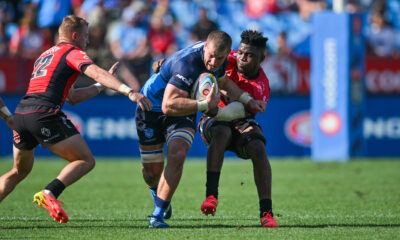
 Champions Cup1 week ago
Bulls to make statement against Stade Français