
International Rugby
How transformed France tortured inept Ireland in Paris
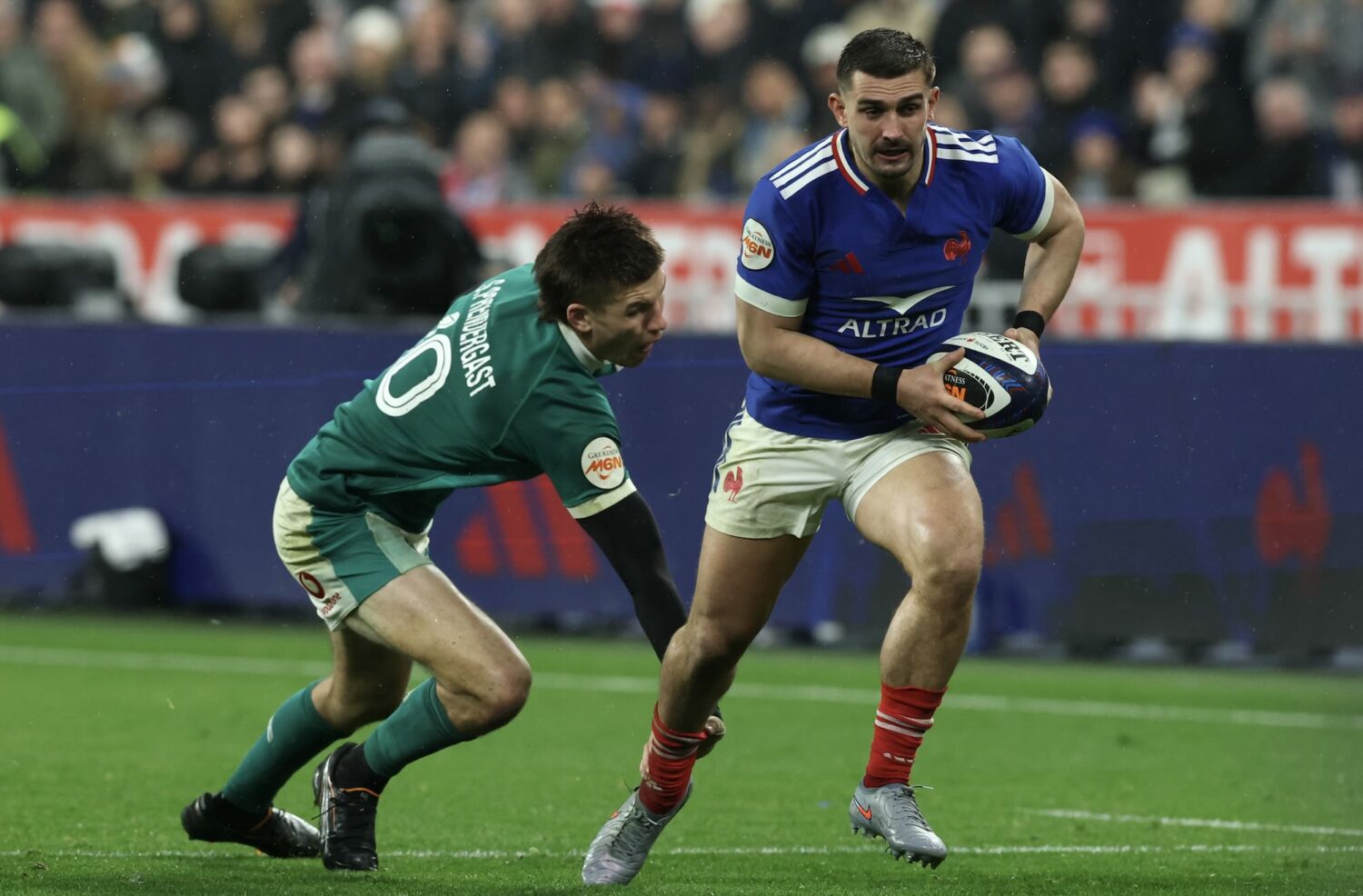
France changed players, approach and tactics to torture Ireland 36-14 in Paris in the Six Nations. We look at the difference between 2026 win and the 2025 win by France against Ireland in Dublin.
Ireland 27 France 42
Six Nations 2026 – Paris
France 36 Ireland 14
Here’s what France did differently.
1) 2026: France dominated the match. 2025: France stole it with efficiency.
Dublin 2025: Ireland had 58% possession and 53% territory, and France still won by 15. France were happy to defend for long stretches (they made 187 tackles) and then punish Ireland when the game fractured.
Paris 2026: France flipped that script. They had 55% possession and 59% territory and played the game mostly in Ireland’s half. That’s not “clinical counterpunching”. That’s control.
The tell: France ran for 588 metres in 2026 vs Ireland’s 385. In 2025 it was basically even (474 vs 477). France went from “equal metres, better strike-rate” to “more ball, more territory, more metres, more everything.”
2) 2026: France carved Ireland open. 2025: France finished better than Ireland.
Clean breaks
-
2025: France 7 clean breaks, Ireland 5 (tight margin).
-
2026: France 19 clean breaks, Ireland 5 (a gulf).
That’s the difference between a game you win and a team you hurt.
3) 2026: France’s pressure forced Irish errors at scale.
Ireland’s “handling under heat” fell apart in Paris:
-
2026 turnover knock-ons: Ireland 11, France 6
-
2025 turnover knock-ons: Ireland 7, France 3
France didn’t just wait for mistakes in 2026. They manufactured them with territory, line-speed, and contestable moments.
4) 2026: Ireland couldn’t tackle France. In 2025 they couldn’t stop France finishing.
-
2025 missed tackles: Ireland 23 (France 16)
-
2026 missed tackles: Ireland 42 (France 21)
That’s not “a few soft shoulders”. That’s structural stress: repeated breaks, repeated reloads, repeated one-on-ones lost.
5) 2026: France won the first hour. 2025: France won the key moments (and the second-half surge).
In Paris, Ireland were 29–0 down before they got going. France had already cashed the bonus point and then eased.
In Dublin, France’s big statement was the second-half blitz, after losing Antoine Dupont early (he went off around the half-hour and later it was confirmed as a cruciate injury).
So:
-
2025: a win built on resilience + clinical finishing after disruption.
-
2026: a win built on front-foot brutality + sustained dominance.
6) The halfback axis changed – and so did the type of threat.
In 2026, with Ntamack out, Jalibert started and had a direct hand in multiple tries, while Dupont called their connection “very positive.”
That matters tactically: Jalibert tends to play flatter and more visibly, and France’s attack in 2026 looked like a team choosing to rip you open in-phase, not just punish you when you overplay.
The simplest summary
Dublin 2025: France were ruthless in chaos – even while defending for long spells.
Paris 2026: France were ruthless in control – more territory, more breaks, more metres, and Ireland cracked.
This is where the regression is most obvious – and most damaging.
1) Physical dominance at the contact point
Ireland’s biggest slide is brutally simple: they are no longer winning collisions consistently.
Against France in Paris, Ireland were regularly knocked backwards in contact, which killed their ability to play fast, accurate phase rugby. Once that happens, everything else collapses – tempo, shape, decision-making.
A season earlier in Dublin, Ireland could still absorb France’s power and recycle quickly. In 2026, France dictated the gainline on both sides of the ball and Ireland were playing from behind bodies instead of on top of them.
This is the clearest regression because Ireland’s entire system is built on fast ruck ball. Take that away and the system has no oxygen.
2) Defensive resilience under sustained pressure
Ireland used to bend without breaking. They now bend, fracture, and then leak tries.
The missed-tackle spike in Paris wasn’t about effort – it was about:
-
repeated reloads
-
fatigued edge defenders
-
centres and back-three players making late, reactive reads
In Dublin 2025, Ireland could survive France’s big moments and reset. In Paris 2026, once France scored early, Ireland never regained defensive authority. The scoreline at halftime wasn’t a fluke it was the logical outcome of structural stress.
3) Attacking clarity without Johnny Sexton
This is not about nostalgia – it’s about control.
Ireland have regressed in:
-
in-game management
-
territory selection
-
when to slow down a match
In Paris, Ireland chased the game far too early, forcing passes under pressure instead of building pressure. Sexton’s absence isn’t about individual brilliance – it’s about knowing when not to play.
Ireland still have quality decision-makers, but they don’t yet have a single, dominant conductor who can steady the ship when momentum is gone.
4) Backline punch against elite defences
Ireland’s backs no longer frighten top-tier defences the way they did in 2022–2024.
Against France:
-
line breaks were rare
-
defenders were not fixed
-
edge space was never clean
France could defend honestly and aggressively, without having to overfold or gamble. That is a massive red flag.
A year ago, Ireland could create indecision. In Paris, France defended with certainty.
5) Psychological authority
This is subtle – but it matters.
Ireland used to walk onto the field believing they could impose themselves on anyone. In Paris, once France landed early blows, Ireland looked like a team hoping the storm would pass rather than one capable of changing the weather.
The best Ireland sides of recent years could absorb momentum swings and reassert control. This version struggled to do either.
The uncomfortable truth
Ireland haven’t fallen off a cliff – but they have slipped off a plateau.
They are no longer physically dominant, tactically inevitable, or psychologically imposing against the very best.
FRANCE 36 IRELAND 14: EVERY PLAYER AND TEAM STAT
AFRICA PICKS: YOUR BEST MONEY-MAKING SIX NATIONS BETS
*CHAT supported







-

 KEO News Wire1 week ago
How NZ Media rated Siya’s Super Springboks
-

 KEO News Wire1 week ago
All Blacks unlock the Springboks R84m American payday
-

 KEO News Wire2 weeks ago
Rugby’s Greatest Rivalry is bigger than the Lions
-
 KEO News Wire1 week ago
Perth puts the Springboks 2027 World Cup path on trial
-
 KEO News Wire2 weeks ago
Springboks are supreme in dismantling the All Blacks
-

 KEO News Wire1 week ago
Boks by 10 – and so it proved over four fabulous Tests
-

 KEO News Wire1 week ago
Springboks & All Blacks justify all the pre-tour hype
-
 KEO News Wire3 days ago
Sacha Feinberg-Mngomezulu is a fabulous rugby player