
KEO News Wire
The Springboks v All Blacks: The New Zealand view
The Kiwis believe the All Blacks will beat the Springboks in Soweto.
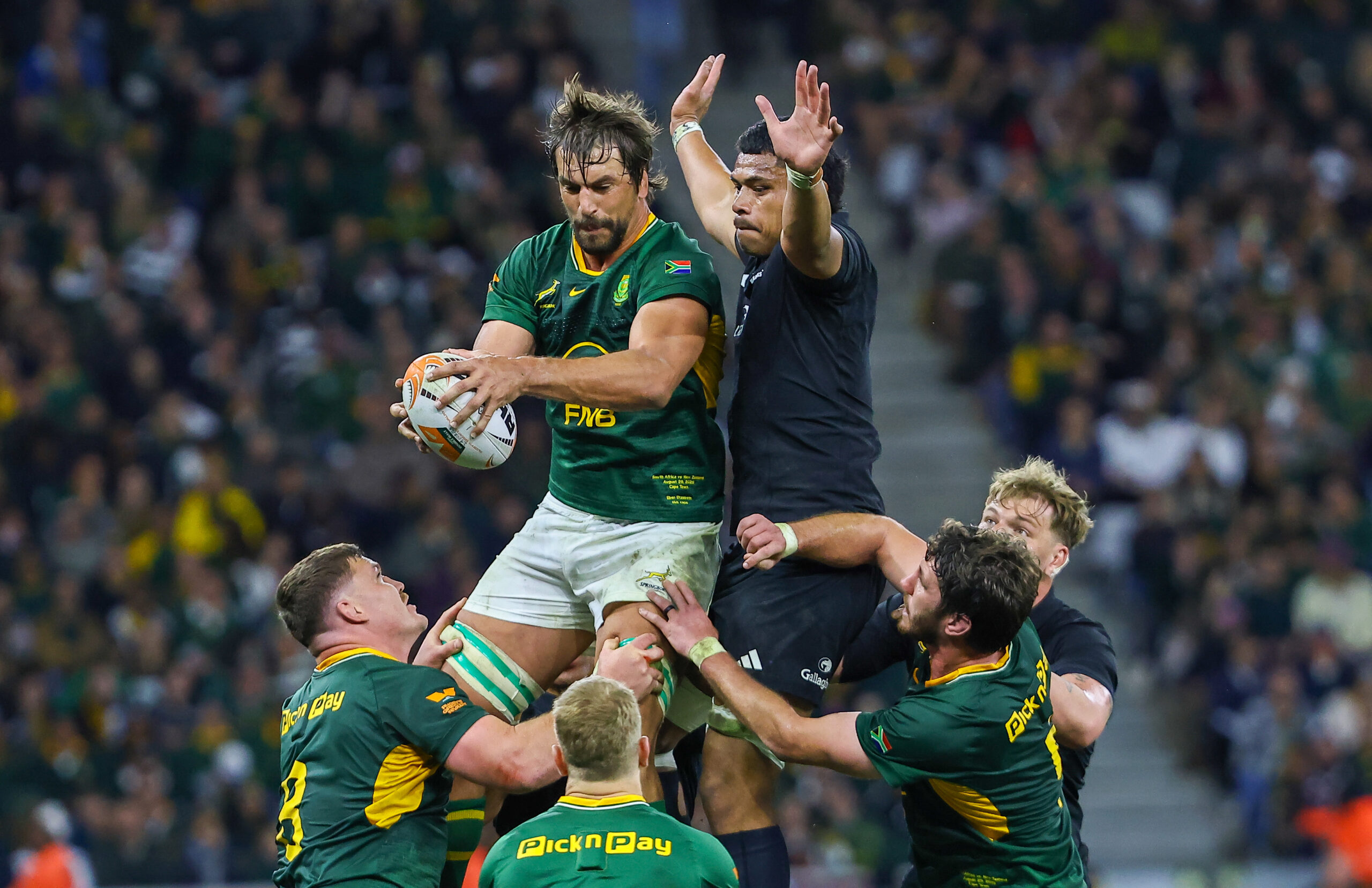
The Springboks v All Blacks third and final Test decider in South Africa is as good as a World Cup final. What has the New Zealand narrative been on the eve of the biggest Test in South Africa since the series decider against the British & Irish Lions in 2021?
Some suggest Saturday’s Test between the Springboks and All Blacks is the biggest since the 1995 World Cup final, won 15-12 by the Springboks. They may have forgotten the drama of the 2009 and 2021 series wins against the British & Irish Lions, both won by last minute penalty kicks from Morne Steyn.
Springboks v All Blacks
Here’s a snapshot of the New Zealand view a day out from Rugby’s Greatest Rivalry third Test.
The New Zealand mood: bruised, but bullish
The dominant New Zealand narrative is not that the Springboks have found an unanswerable formula. It is that South Africa deserved Cape Town because they controlled the pressure points, but the All Blacks still believe their faster, wider game can win the decider at altitude.
The confidence is now more measured than it was after Ellis Park: less swagger, more emphasis on lineout accuracy, discipline and surviving the opening quarter.
What Kiwi voices are saying
| Voice | Central argument |
|---|---|
| Steve Hansen | The latest attributable Hansen comments I could verify were made before Cape Town. He said New Zealand were positioned to win the series but would have to match South Africa’s desperation and energy. His consistent theme has been that the All Blacks must compete physically and aerially without trying to imitate the Springboks. This should not be presented as a fresh post-Cape Town prediction. Planet Rugby |
| John Plumtree | Plumtree believes Dave Rennie identified the wrong problem when he complained about the Bok scrum. The real fault line is the All Blacks’ lineout: without clean first-phase possession they cannot reach the five or six phases needed to expose South Africa’s defence. His conclusion is starkthe New Zealand attack looks capable of scoring heavily, but only from quality ball. SA Rugby Magazine’s report of the PlayZN TMO podcast |
| Stephen Donald | Donald remains strongly supportive of Ruben Love and Rennie’s high-tempo approach. He concedes that South Africa deserved Cape Town through physicality, lineout pressure and breakdown disruption, but believes New Zealand finished strongly enough to show they are “not too far off”. His pre-series bravado has moderated, although he is still predicting an All Blacks victory. Planet Rugby’s report of The KOKO Show |
| The Breakdown | The show’s post-Cape Town framing is revealing: “Where the Second Test Was Won and Lost”, rather than a fundamental crisis discussion. The focus is on why New Zealand could not establish its tempo against South African pressure. The Breakdown episode |
The wider New Zealand media narrative
1. Cape Town was lost through pressure and executionnot an inferior blueprint.
The most detailed New Zealand podcast analysis came from Rugby Direct. Its assessment was that South Africa were deserved winners and that no single refereeing decision determined the result. The All Blacks created opportunities but failed at decisive moments: an inaccurate attacking kick, a needless penalty and a lost five-metre lineout. The recurring problem areas were the lineout, high-ball work and discipline. Rugby Direct
That overlaps almost perfectly with Plumtree’s analysis. The scrum debate is generating headlines, but the more important rugby problem is the quality of New Zealand possession.
2. New Zealand still believes South Africa can be run off its feet.
The most confident strand of the coverage is based on altitude, fitness and second-half scoring. The All Blacks have outscored the Springboks nine tries to four across the opening two Tests and, according to 1News, won the combined second halves 33-12.
New Zealand stayed in Cape Town before travelling late to Johannesburg and believes its conditioning, fresher pack and high-tempo game can become increasingly effective as the match progresses. Asafo Aumua, Sam Darry and Peter Lakai have been brought into the starting pack, with Darry specifically expected to stabilise the lineout. 1News analysis and team report
The unspoken New Zealand wager is: keep the score close early, raise the tempo and make the Bok forwards defend repeatedly at altitude.
3. The biggest fear is another slow start.
Tana Umaga identified the starts as New Zealand’s clearest weakness. The All Blacks have spent both Tests trying to escape early deficits. The resilience is admired, but the consensus is that they cannot again give South Africa immediate scoreboard control, possession and emotional momentum. Sport Nation
Buck Shelford’s variation on that theme is that New Zealand are sometimes playing frantically rather than quickly: forcing the tempo, making errors and failing to build pressure with sufficient patience. Sport Nation
4. The Rassie-Rennie scrum dispute is loud, but it is also becoming a distraction.
Some New Zealand commentary has portrayed Erasmus as manipulating the occasion through late selection changes, officiating pressure and public counterattacks. One 1News opinion column argued that the sideshow had crossed the line. 1News
But Plumtree’s intervention cuts against that grievance narrative: he says Rennie should not have raised the technical scrum complaint publicly and that Erasmus was entitled to respond. Rugby Direct similarly judged that South Africa won because it was better, not because of one decision.
AFRICA PICKS – TRIPLE YOUR CASH WITH THE ALL BLACKS
The New Zealand story on the eve of Soweto is:
The Springboks won Cape Town through physical pressure, lineout disruption and greater accuracy, but the All Blacks remain convinced that their attacking game is more dangerous. If New Zealand can survive the opening assault, secure clean lineout ball and play fast without becoming frantic, they believe altitude and fitness will expose South Africa late.
It is respect without surrender. The Kiwis acknowledge that the Springboks currently own the collisions and the pressure moments; they do not accept that the Boks in South Africa own the rivalry – or the decider.

-

 KEO News Wire2 weeks ago
Stormers rave about the return of King Kolisi
-

 Champions Cup5 days ago
Investec Champions Cup is SA rugby’s next frontier
-
 KEO News Wire1 week ago
Stormers and Sharks set for Bok-loaded Cape Town blockbuster
-
 KEO News Wire1 week ago
All Blacks under pressure as Wallabies eye Eden Park shock
-
 KEO News Wire1 week ago
All Blacks hammering of Wallabies give Springboks series win perspective
-

 Champions Cup20 hours ago
Investec Champions Cup: South Africans who rocked in Round 1
-
 Rugby1 week ago
Bulls and Lions ready for fierce Jukskei derby
-

 Champions Cup2 days ago
Investec Champions Cup: Bulls & Stormers make their mark as Lions play through grief