
KEO News Wire
The Springboks v All Blacks. The South African view
The South Africans believe the Springboks will beat the All Blacks in Soweto.
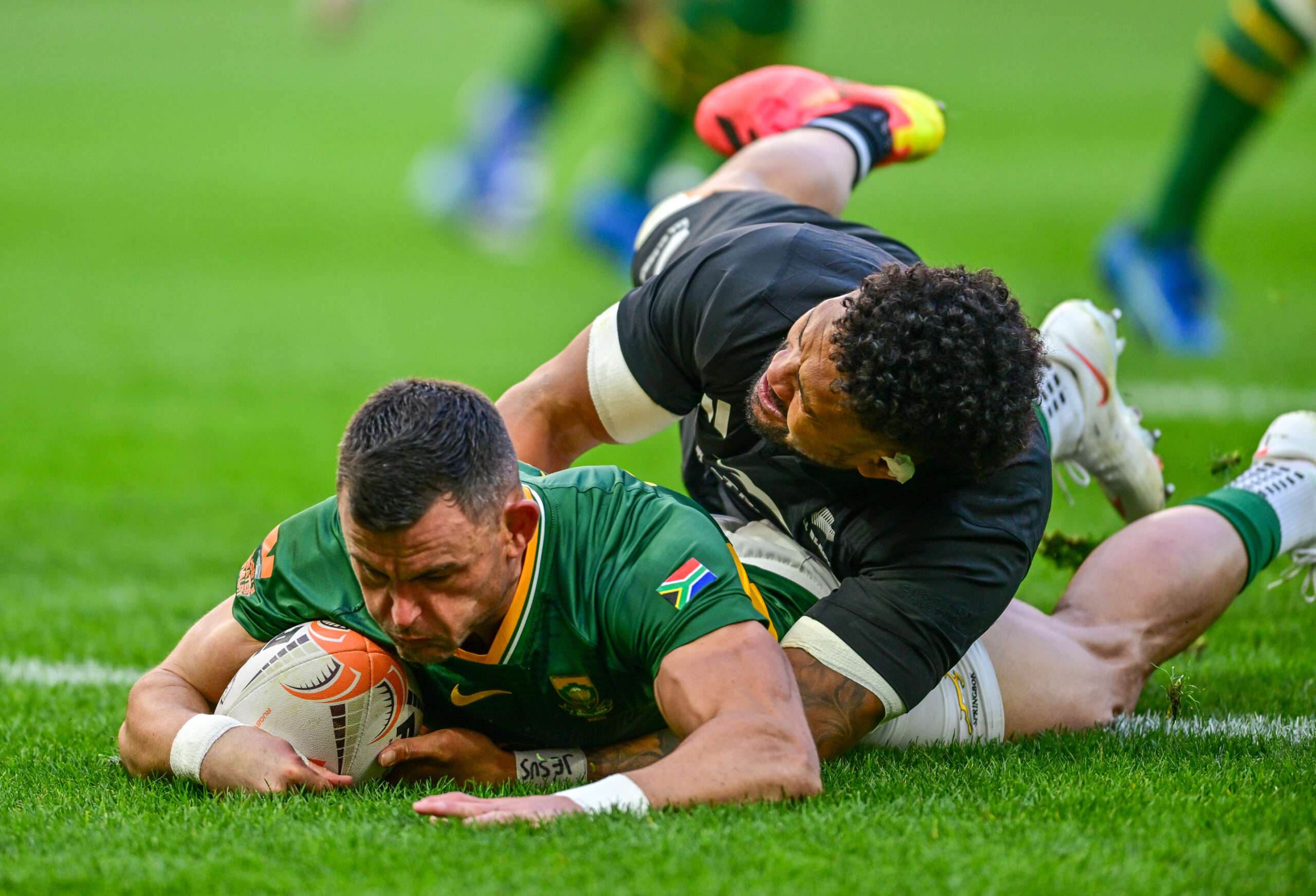
The Springboks v All Blacks third and final Test decider in South Africa is as good as a World Cup final. What has the South African narrative been on the eve of the biggest Test in South Africa since the series decider against the British & Irish Lions in 2021?
Some suggest Saturday’s Test between the Springboks and All Blacks is the biggest since the 1995 World Cup final, won 15-12 by the Springboks. They may have forgotten the drama of the 2009 and 2021 series wins against the British & Irish Lions, both won by last minute penalty kicks from Morne Steyn.
Springboks v All Blacks
Here’s a snapshot of the South African view a day out from Rugby’s Greatest Rivalry third Test.
The South African mood: power restored, danger acknowledged
The prevailing South African narrative is confident but not triumphalist. The Boks are widely considered physically superior and arguably should already be 2-0 ahead, but the All Blacks nine tries to South Africa’s four have created a genuine warning: if the decider becomes loose, fast and possession-heavy, New Zealand have the more lethal attack.
| Voice | Eve-of-Test narrative |
|---|---|
| Gavin Rich | Frames the decider as the world’s best power game against its best attack. South Africa’s route is the “main road”: scrum, maul, lineout disruption, contestable kicking and clinical finishing. He believes the Boks controlled most of the first two Tests, but says nine conceded tries cannot be ignored. If the scrum is properly rewarded, he sees a Bok advantage; if New Zealand neutralise it and create tempo, the contest changes completely. SuperSport |
| Brenden Nel | Concentrates on New Zealand’s attempt to repair its tight five and lineout. Dropping Codie Taylor and introducing Sam Darry amounts to a calculated gamble against a Bok lineout that will attack any uncertainty. His reporting suggests the All Blacks have selected mobility and late tempo while accepting some physical risk. SuperSport |
| Jon Cardinelli | Praises Rassie Erasmus for finding a settled, battle-ready 23. The intrigue is whether the announced front row starts or whether Erasmus again manipulates the order. Either way, South Africa can finish with – or begin with – Ox Nché, Malcolm Marx and Wilco Louw, arguably its most destructive scrum combination. Rugby365 |
| Craig Ray | Supplies the most balanced corrective to the crude “Bok power versus Kiwi flair” argument. Both sides are more complete than those stereotypes: the Boks can attack quickly and intelligently, while New Zealand can defend and compete at the set piece. The winner will probably be the side that copes best with the opponent’s preferred game. Daily Maverick |
| Mark Keohane | Argues there is no morally superior way to win a Test. South Africa win through discipline, collisions, kicking and set-piece accuracy; New Zealand win through rhythm, width and attacking instinct. Siya Kolisi supplies the emotional edge, while Eben Etzebeth and Marx embody the physical one. Keohane’s decisive warning: disrupt New Zealand’s lineout and remain accurate; chase the match and the All Black backs will feast. Sunday Times |
| Keo.co.za | Takes a harder view of the breakdown and refereeing contest. Its position is that Cape Town was won partly because the Boks stopped waiting for protection from the referee, matched New Zealand in the grey areas and used the All Blacks’ own “dark arts” against them. Soweto will consequently be a battle of power, skill and manipulation. Keo.co.za |
| Sport24 | The accessible Sport24 output is more reportorial than ideological: team continuity, New Zealand’s tight-five changes and the scrum controversy dominate. Its broader arc is that Ellis Park represented wasted Bok dominance “playing with their food” while Cape Town restored the formula without proving the performance complete. I could not verify a fresh, signed Sport24 eve-of-Test column strongly enough to attribute a more specific verdict. |
| Voice | Eve-of-Test narrative |
|---|---|
| Clinton van der Berg – SA Rugby Magazine | Provides the strongest South African rejection of the increasingly spiteful scrum and refereeing debate. Van der Berg argues that the rivalry has descended into juvenile accusations, grievance and conspiracy theories. Referees will make mistakes, but that does not mean either side is being systematically cheated. His call is for the coaches, pundits and supporters to end the circus and allow two outstanding teams to settle the series through skill, physicality and mutual respect. SA Rugby Magazine |
This also adds an important qualification to the overall narrative:
- Not every South African voice supports the scrum culture war. While Mallett, Shimange and others believe New Zealand is attempting to influence the referee, Van der Berg considers the public accusations tedious and damaging to a rivalry traditionally grounded in respect.
Former Springboks and the podcast view
| Voice | Central argument |
|---|---|
| Nick Mallett | Represents the most combative South African interpretation of the scrum. He believes New Zealand deliberately collapses or destabilises scrums to manufacture resets and uncertain decisions, describing it as effectively cheating. He expects Erasmus to attack that area relentlessly because no New Zealand front row can match South Africa’s best combination. RugbyPass |
| Schalk Burger | Says Cape Town was won through scoreboard pressure, but remains concerned by the lack of attacking fluencyparticularly from turnover and transition possession. With New Zealand scoring nine tries in two Tests, his “either/or” is stark: South Africa must either repair its defence or find enough attacking fluency to keep pace. Planet Rugby |
| Jean de Villiers | Asks how South Africa won despite several statistical disadvantages. His concern is execution: 15 turnovers or handling errors illustrate that Cape Town was a valuable result rather than a polished performance. He sees considerable room for improvement before Soweto. Planet Rugby |
| Hanyani Shimange | Contextualises those statistics. New Zealand passed and carried more because it was chasing the scoreboard; South Africa deliberately kicks after one or two phases and contests possession. Separately, he believes the public New Zealand scrum complaints are designed to influence officials and “depower” the Boks’ biggest weapon. SA Rugby Mag |
| Victor Matfield | Focuses on the traditional pillars of Bok success: lineout pressure, leadership and the ability of senior forwards to dominate an important week. His praise of Etzebeth – 18 tackles in Cape Town and sustained lineout pressure – captures his view that South Africa’s great players must drive the decider rather than allow it to become a contest of attacking systems. RugbyPass |
Rapport and Hendrik Cronjé
Focuses on the scrum-and-referee strand of the South African conversation. Cronjé has highlighted the question of which front row is genuinely square and amplified Kieran Read’s observation that Erasmus is exceptionally effective at shaping the refereeing conversation.
That suggests a view that the week before Soweto is being contested publicly as well as technically: Erasmus is making certain the referee enters the match conscious of New Zealand’s scrummaging angles and South Africa’s claimed dominance. Cronjé was also notably optimistic before the Cape Town response. Hendrik Cronjé
AFRICA PICKS: TRIPLE YOUR CASH – GREAT ODDS ON ALL BLACKS
The dominant South African themes
- “We should be 2–0 up.” There is a strong belief that South Africa’s physical control has exceeded what the series score reflects.
- The 9–4 try count is the anxiety. New Zealand have required less pressure and less territory to manufacture tries.
- The scrum debate has become a culture war. Mallett, Shimange, Rich and Cronjé see the New Zealand messaging as an attempt to influence how South Africa’s greatest strength is officiated.
- South Africa must remain South Africa. Even the more balanced voices agree that trying to outpass or outrun New Zealand would be strategically foolish.
- Continuity is being welcomed. The strongest available pack, experienced leadership and minimal selection disruption point towards clarity rather than experimentation.
- Altitude could cut both ways. Bok power may be magnified early, but a lighter All Black combination could be dangerous late if South Africa tire or surrender possession.
South Africa believes it has the stronger pack and the clearer route to victory, but knows New Zealand possesses the more explosive attack. The Bok objective is not to beat the All Blacks at their own game. It is to deny them the possession, field position and rhythm required to play it.
New Zealand’s belief is that it can run the Boks off their feet. South Africa’s belief is that they should never be allowed to start running.

-

 KEO News Wire2 weeks ago
Stormers rave about the return of King Kolisi
-

 Champions Cup5 days ago
Investec Champions Cup is SA rugby’s next frontier
-

 KEO News Wire1 week ago
Stormers and Sharks set for Bok-loaded Cape Town blockbuster
-
 KEO News Wire1 week ago
All Blacks under pressure as Wallabies eye Eden Park shock
-
 KEO News Wire1 week ago
All Blacks hammering of Wallabies give Springboks series win perspective
-
 Rugby1 week ago
Bulls and Lions ready for fierce Jukskei derby
-

 Champions Cup19 hours ago
Investec Champions Cup: South Africans who rocked in Round 1
-

 Champions Cup2 days ago
Investec Champions Cup: Bulls & Stormers make their mark as Lions play through grief