
International Rugby
World rugby media reacts to Springboks 43-0 win v Wales
The world has spoken on the Springboks
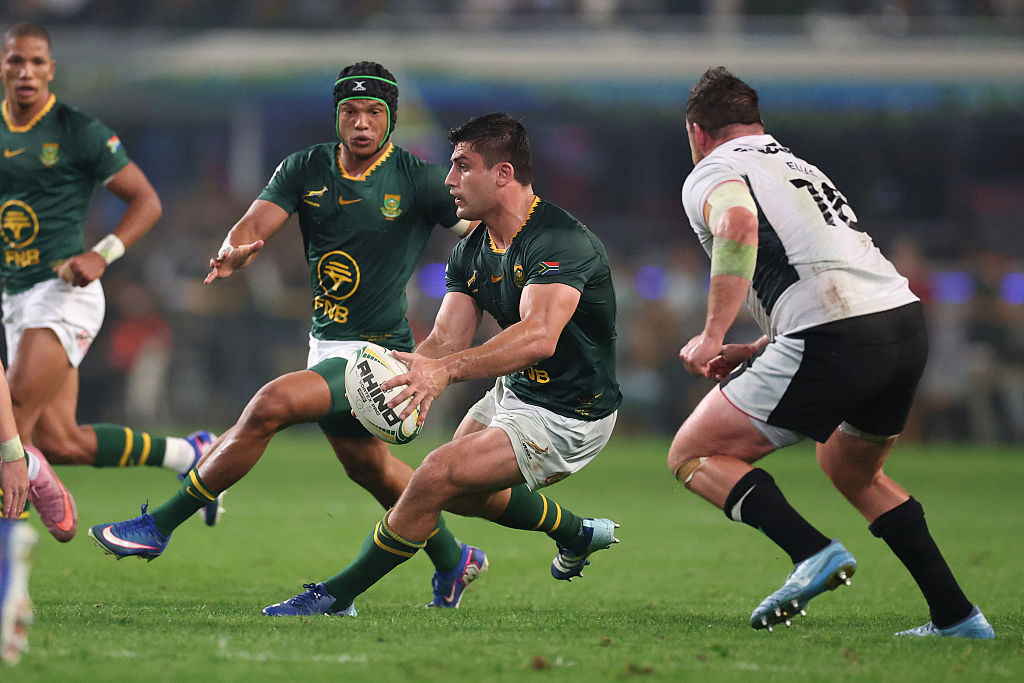
The Springboks 43-0 demolition of Wales was emphatic yet the dominant media narrative was that South Africa could beat Wales by 43 points while playing well below their collective best.
Springboks
Keo.co.za: Five Boks were the real winners
Keo.co.za judged the result emphatic but argued that the greatest victories were individual rather than collective.
Gerhard Steenekamp, Carlu Sadie, Ruben van Heerden, Paul de Villiers and Cobus Reinach were identified as the five players who most strengthened their positions in Erasmus’s World Cup planning.
Sadie and Van Heerden were particularly impressive on debut, while Reinach was rated the game’s outstanding player.
The Keo verdict described two contrasting features of the performance: imposing physical dominance and frustrating inaccuracy.
South Africa were far too powerful for Wales, but 11 first-half handling errors and poor conversion of repeated visits to the Welsh 22 ensured the winning margin did not accurately reflect the difference between the teams.
“Strong and then sloppy” was the story of the Boks’ afternoon.
Rugby365: Scrappy Boks blank Wales again
Rugby365 led with the headline “Springboks blank Wales…again” and also focused on the imperfect nature of the victory.
Its match report described the Boks as not being at their clinical best and called the performance scrappy, despite seven unanswered tries and another comprehensive shutout of Wales.
The outlet’s assessment reflected the contradiction at the centre of the match: South Africa were comfortably superior in every physical department, but their execution prevented a far bigger score.
The result followed the 73-0 victory in Cardiff in November, meaning Wales have now played 160 consecutive minutes against the Boks without scoring a point.
Reuters: Sloppy Springboks still far too strong
Reuters was even more direct, describing the world champions as “sloppy Springboks” in its headline.
The international news agency highlighted poor handling and missed opportunities, particularly after South Africa established early control through their forwards and set piece.
Reuters nevertheless praised the impact of the newcomers, with 20-year-old flyhalf Vusi Moyo singled out for an assured Test debut.
The wider Reuters assessment was that South Africa’s physical strength established a decisive advantage, even though the Boks never produced the accuracy required to maximise it.
Wales coach Steve Tandy praised his team’s work rate and defensive effort, but neither could disguise the gulf between the sides.
The Guardian: Neither side was great – one scored 43 points
The Guardian produced perhaps the most cutting summary of the Test.
Its live coverage concluded that neither team had played particularly well, but one had scored 43 points and the other none.
That observation captured the enormous difference in resources, depth and physical capability between the nations.
South Africa were able to change 10 starters, introduce four debutants and perform inconsistently, yet still win by more than 40 points without conceding.
For Wales, endeavour was not enough. They defended in numbers and showed greater resistance than they had in Cardiff, but rarely threatened the Springbok tryline and could not withstand the accumulated pressure.
The Times: Wales thrashed – and it could have been worse
The Times framed the result from a Welsh perspective with the headline: “Pointless Wales thrashed by Springboks – but it could have been worse.”
Its report stressed that Wales were again unable to score against South Africa and that the final margin might have been considerably larger had the Boks been more accurate.
The Times highlighted South Africa’s dominance at the scrum, breakdown and in the physical collisions, with Jasper Wiese, Reinach and De Villiers central to the home side’s control.
Wales missed nine tackles inside the opening 15 minutes and spent much of the contest trying to limit the damage rather than seriously challenging for victory.
The British newspaper’s wider verdict was that the match exposed the growing distance between Wales and the best teams in Test rugby.
SA Rugby Magazine: Physicality laid the foundation
SA Rugby Magazine’s coverage focused on the Boks’ seven tries, second successive shutout of Wales and the performances of the debutants.
Its lead match report noted that Moyo and Jaco Williams enjoyed memorable introductions to international rugby, with Williams scoring on debut.
In a separate reaction piece, Paul de Villiers said South Africa’s uncompromising physicality had been the foundation of the win.
The Boks dominated from the opening exchanges, repeatedly winning collisions and forcing Wales to defend on the back foot.
The emphasis was more positive than that of the international media, with the clean sheet, squad depth and successful integration of new players presented as the most significant outcomes.
Cape Times: Ruthless Boks and dream debuts
The Cape Times described the Springboks as ruthless and concentrated on the successful debuts of Moyo and Williams.
Its report highlighted the influence of the Bok bench in the second half and the inability of Wales to secure meaningful possession or territory.
Cobus Reinach’s control at scrumhalf and South Africa’s dominance of the collisions and breakdown were central themes.
The assessment was that Wales battled gamely, but never possessed the power or attacking authority to alter the direction of the match.
Official Springbok verdict: Not firing on all cylinders
SA Rugby’s official report described the victory as a comprehensive outplaying of Wales, but also acknowledged that the Boks had not fired on all cylinders.
South Africa’s 19-0 halftime advantage made the result safe early, with the official account emphasising that victory was never seriously in doubt.
The win was also South Africa’s 11th in succession and maintained their perfect start to the Nations Championship.
The world-media verdict
South Africa were physically dominant, individually encouraging and collectively inaccurate.
The 43-0 scoreline confirmed the Springboks’ depth and the scale of Wales’s problems, but it did not represent an 80-minute masterclass.
The Boks were brutal when they were direct, particularly through the Wiese brothers, Steenekamp, Sadie, Van Heerden and De Villiers. Reinach gave the performance certainty and direction, while the debutants showed they belonged at Test level.
South Africa completed July with Nations Championship wins of 45-21 against England, 42-28 against Scotland and 43-0 against Wales. They scored 130 points in three Tests, earned every available bonus point and used the month to expand their playing depth.
The most ominous message for their rivals is that they did all of that without producing a complete 80-minute performance or ever playing the same starting XV or match 23.

-
 KEO News Wire2 weeks ago
Eben Etzebeth ignites spirited & stunning Sharks in URC
-

 KEO News Wire2 weeks ago
Stormers rave about the return of King Kolisi
-
 KEO News Wire1 week ago
Stormers and Sharks set for Bok-loaded Cape Town blockbuster
-

 KEO News Wire3 days ago
Investec Champions Cup is SA rugby’s next frontier
-
 KEO News Wire1 week ago
All Blacks under pressure as Wallabies eye Eden Park shock
-
 Rugby1 week ago
Bulls and Lions ready for fierce Jukskei derby
-
 KEO News Wire6 days ago
All Blacks hammering of Wallabies give Springboks series win perspective
-
 KEO News Wire3 days ago
Stormers and Bulls hit Europe with derby momentum