
KEO News Wire
How Johan Ackermann recharged the champion-seeking Bulls
The Bulls coach remained consistent in his messaging to his players through every early season setback: stay together, trust each other and fight for one another.
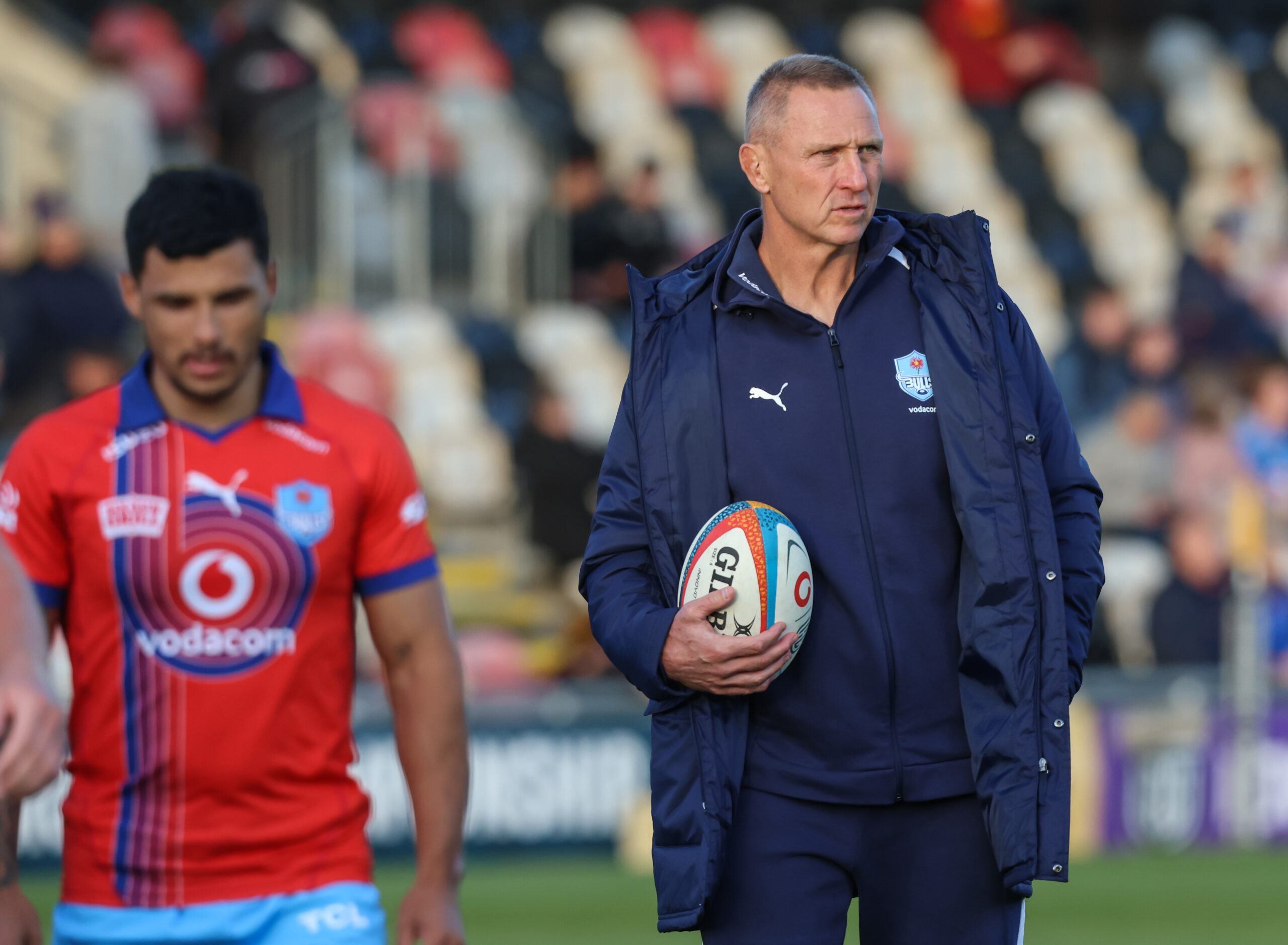
Johan Ackermann this season refused to concede defeat, even in the darkest post-match press conferences, be it in the Investec Champions Cup or the URC. He publicly never berated, blamed, or excused his players.
How Johan Ackermann recharged the champion-seeking Bulls
Ackermann spoke of simple values: unity, desire, respect and care; not for a jersey but for each other.
‘Look after your mate and he looks after you,’ would be an accurate summary of his messaging. Scramble on defence, work back on defence, work off the ball and effort over the ball. Those are elements that define quality rugby teams.
If his players were doing this consistently, the jersey would be in a good place.
The closest Ackermann came to publicly involving his players in a media discussion was in response to a question about how hardened Springboks could have such a soft belly when playing for the Bulls.
He acknowledged the question and agreed that players who were exceptional for the Boks were not showing that application for the Bulls, but stated it was something for him to fix in-house, privately and away from cameras and microphones.
The response was telling in the backend of the season. The Bulls, with those hardened World Cup-winning Springboks leading the charge, fronted every challenge and refused to ever again wave a white flag.
A group of players, whose defensive generosity included conceding 46 points against Bordeaux at Loftus, 60 against Bristol’s Bears at Loftus and 43 against the Lions at Loftus, found their soul after seven successive defeats in all competitions.
The Bulls, heroic in a last 16 Champions Cup defeat to Glasgow’s Warriors, knew that with just three wins from their first eight URC league matches, they would always be in play-off mode for their remaining 10 matches.
The response was remarkable.
They lost just one of those 10 URC matches, in the north v south derby at Loftus to the Stormers and found glory in desperation by winning two league matches overseas by two points respectively against Edinburgh and the Scarlets.
They dazzled in attack at home, but on the road they showed as much appetite for making tackles as they did for attacking from transitional play.
Ruan Nortje and Marcell Coetzee, in the pack, led through action and Handre Pollard, a double World Cup winner with the Springboks, took command at No 10.
Individually, Embrose Papier sizzled in a league season that won him the South African Player of the Year, but it was the mentality to refuse to lose that got the Bulls through an away semi-final against Glasgow’s Warriors.
The Scottish club had beaten them 21-12 in the league match in Glasgow, beaten them again in the Champions Cup last 16 in Glasgow and, having finished the league season in first place, were favoured to make it three in a row at Murrayfield.
The Bulls, 21-3 down and with Pollard and Nortje sin-binned in this period, trusted, played for, and scrambled for each other to stay in the fight and ultimately dominate the fight to win by a point.
Willie le Roux, who passed 400 professional appearances a month ago, reminded the naysayers of his class, Pollard played with enthusiasm and a smile that screamed enjoyment; and Coetzee and Nortje showed disregard for their bodies in how they carried and hit rucks.
The likes of Papier, Kurt-Lee Arendse, Johan Grobbelaar and Cameron Hanekom flourished and scored some spectacular tries, but it was never the attack that won the Bulls 11 of their last 12 URC matches, including the quarter-final and final.
It was their defence and the turnovers forced by Marco van Staden, Grobbelaar, Hanekom and Jeandré Rudolph.
The steel provided by Harold Vorster and Canan Moodie in the midfield was telling, as was the tight five’s work rate outside of their obvious scrumming dominance.
It was the belief of a team in each other and their refusal to disappoint each other that got them to Dublin for next Friday’s URC Grand Final.
*Mark Keohane writes a weekly rugby column ‘Keo Uncut’ for the Sunday Times and Times Live






-
 International Rugby2 weeks ago
Springboks v All Blacks: Rugby’s Greatest Rivalry
-

 KEO News Wire2 weeks ago
Local is lekker as the Le Roux’s take charge of the Stormers
-

 KEO News Wire2 weeks ago
The Men in Black are back Baby: Stormers reveal
-

 KEO News Wire2 weeks ago
Joel Stransky’s drop goal was the real thing
-
 KEO News Wire1 week ago
Siya’s Super Springboks are simply the best in the world
-
 KEO News Wire1 week ago
The Springboks v All Blacks: The New Zealand view
-
 KEO News Wire1 week ago
The Springboks v All Blacks. The South African view
-
 KEO News Wire1 week ago
42 wins in 49 Tests: These Springboks are simply relentless