
International Rugby
Thank you Japan for what you have done for SA Rugby
South African players and coaches have helped transform Japan Rugby League One into one of the world’s most successful club competitions. In return, Japan has provided a platform that has extended careers, enriched lives and become a vital contributor to the Springboks success.
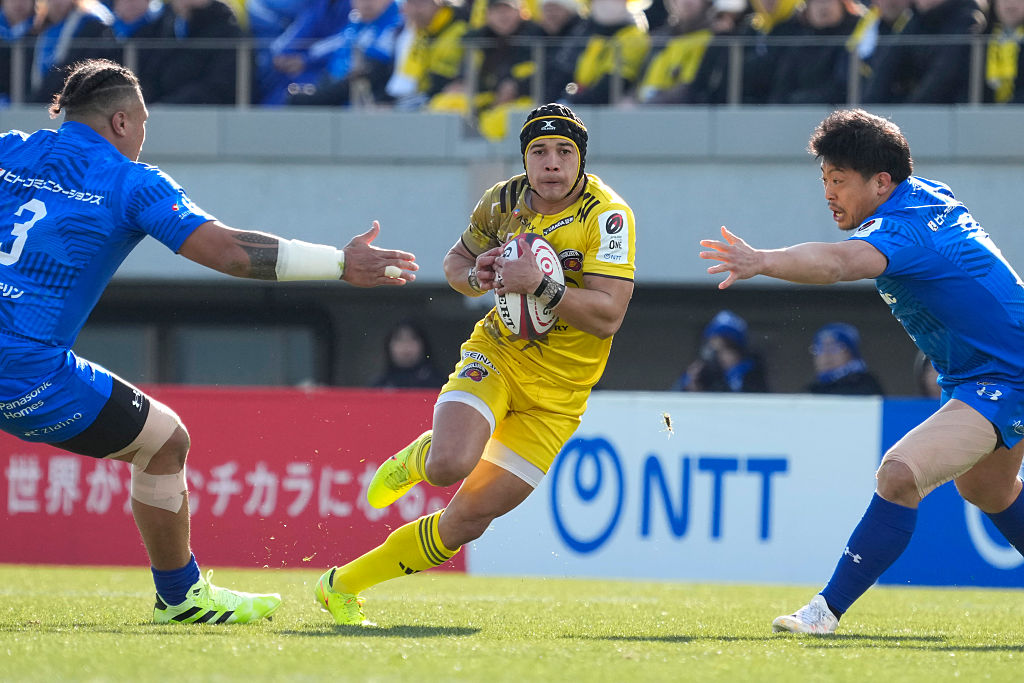
There was a time when South African rugby viewed Japan as a finishing school. A place where players went to wind down careers, secure financial stability and disappear from the weekly rugby conversation. Those days are gone. Thank you Japan.
Japan
The Springboks are back-to-back World Cup winners, going for an unprecedented three-peat thanks so much to the influence of Japanese rugby – and Japan’s League One and Two leagues.
Today, Japan is one of the most important rugby destinations on the planet and South Africans have played a central role in that transformation.
The recently completed Japan Rugby League One season offered another reminder of just how powerful that relationship has become. More than 50,000 spectators attended the final, the third time in the last five seasons that the championship match has attracted a crowd in excess of 50,000. The numbers matter because they speak to a competition that is no longer emerging. It has arrived.
And wherever you look across the Japanese game, there is a South African fingerprint.
From players to coaches, from World Cup winners to rising stars, South Africans have helped elevate standards, drive professionalism and contribute to a rugby culture that continues to grow at remarkable speed.
The relationship has become one of the great success stories of the professional era.
The Frans Ludeke blueprint
No South African coach has done more to shape modern Japanese club rugby than Frans Ludeke, who lead the Kubota Spears to their first ever club championship victory in a 17-15 win against the Saitama Wild Nights.
Long before Japan became fashionable, Ludeke recognised its potential in 2016, when he joined the Spears.
His team may have lost this past weekend’s final 22-13 to new All Blacks coach Dave Rennie’s Kobe Steelers, but Ludeke, a Bulls Super Rugby-winning coach, has experienced title success in Japan and so much player development.
The former Bulls coach embraced the challenge, invested in local player development and helped establish the standards that many clubs now regard as normal.
His success was never just about winning matches, but about building environments.
South African coaches have traditionally brought structure, physicality, detail and accountability. Ludeke became one of the most influential examples of that approach, earning enormous respect throughout Japanese rugby circles.
His legacy can be seen across the competition today. South African coaches are trusted because Ludeke proved that expertise could be shared without compromising Japanese rugby’s unique identity.
He helped build bridges rather than barriers.
South Africa’s players have become rugby diplomats
The South African influence stretches far beyond the coaching box.
Week after week, some of the Springboks most recognisable names have become ambassadors for both South Africa and rugby itself.
Players such as Cheslin Kolbe, Malcolm Marx, Pieter-Steph du Toit, Kwagga Smith, Damian de Allende, Jesse Kriel, Lood de Jager, Franco Mostert, Faf de Klerk, Lukanyo Am and Manie Libbok and many others have become household names among Japanese supporters.
What makes the relationship special is that these players are not viewed merely as imports. They are embraced and Japanese rugby supporters have a deep appreciation for professionalism, humility and commitment. South Africans have consistently delivered all three.
They sign autographs. They engage with supporters. They mentor local players and they become part of the communities.
The result is a rugby exchange that benefits everyone involved.
South African players bring experience from World Cups, Rugby Championships, United Rugby Championship campaigns and European competitions. Japanese rugby offers a culture built on respect, discipline and continuous improvement.
Both players and coaches leave richer for the experience.
The Springboks are perhaps the biggest winners
There is a compelling argument that no national team has benefited more from Japan Rugby League One than the Springboks.
For years, South African rugby worried about losing players overseas, but today, that conversation has changed.
Japan has become an environment where Springboks can remain world-class while extending careers and preserving bodies.
The season structure is different, the travel burden is manageable and the physical demands, while still significant, are often less relentless than the grind of northern hemisphere club competitions.
The result is that many Springboks arrive in national camp fresh, motivated and physically capable of performing at their best.
That has mattered enormously during the most successful period in South African rugby history.
Back-to-back Rugby World Cups were won with numerous squad members based in Japan.
The Japanese league has not weakened the Springboks; it has in many ways strengthened them.
It has allowed elite players to remain elite for longer.
Always respect to Japan and its rugby.
‘日本と日本のラグビーには常に敬意を払っています。スプリングボクスと南アフリカのラグビーのためにしてくださっていることに感謝します。’
Japan League League One is a competition blossoming
The crowds tell one story and he quality of players and match-ups tells another.
League One is no longer dependent solely on imported stars for relevance.
The competition has developed its own identity, and Japanese internationals are stronger than ever.
Local player pathways continue to improve and the standard of coaching has risen significantly.
Eddie Jones is back at the helm of the national team, but the wonderful genius of Jones now gets to choose from the most talented group of Japanese born, raised and adopted/naturalised players.
Foreign stars add value, but they are increasingly part of a broader rugby ecosystem that is producing outstanding Japanese talent.
Japan is not trying to replicate the English Premiership, the Top 14 or the United Rugby Championship.
It is creating something distinctly Japanese, and that uniqueness has become part of its appeal.
Gratitude goes both ways
South Africans are rightly proud of what their players and coaches have contributed.
The trophies, the professionalism, the expertise and the leadership.
But any honest assessment must acknowledge that Japan has given just as much in return.
It has provided career opportunities.
It has welcomed families.
It has created financial security.
It has exposed players and coaches to a culture unlike any other in world rugby.
Many South Africans return home speaking not only about rugby but about the life lessons learned in Japan.
I recall Springboks flyhalf Jaco van der Westhuyzen crediting so much to his Japanese experience.
The respect, the humility, the attention to detail, the sense of community and the experience changes people. Even more so than the rugby. That is why so many return year after year.
A partnership that enriches both nations
In an era where professional rugby relationships are often discussed through the lens of contracts and player movement, the South African-Japanese connection feels refreshingly different.
It is built on mutual respect.
South Africans have helped elevate Japanese rugby, and Japan has helped sustain and enrich South African rugby.
The beneficiaries are not only the players, coaches and clubs involved. The ultimate winners are the supporters who get to witness a relationship that continues to strengthen two proud rugby nations.











-
 International Rugby1 week ago
Springboks v All Blacks: Rugby’s Greatest Rivalry
-

 KEO News Wire2 weeks ago
Local is lekker as the Le Roux’s take charge of the Stormers
-

 KEO News Wire2 weeks ago
The Men in Black are back Baby: Stormers reveal
-

 KEO News Wire2 weeks ago
Joel Stransky’s drop goal was the real thing
-

 KEO News Wire1 week ago
Siya’s Super Springboks are simply the best in the world
-

 KEO News Wire1 week ago
The Springboks v All Blacks: The New Zealand view
-

 KEO News Wire1 week ago
The Springboks v All Blacks. The South African view
-

 KEO News Wire2 weeks ago
Springboks turn the All Blacks dark arts against them